

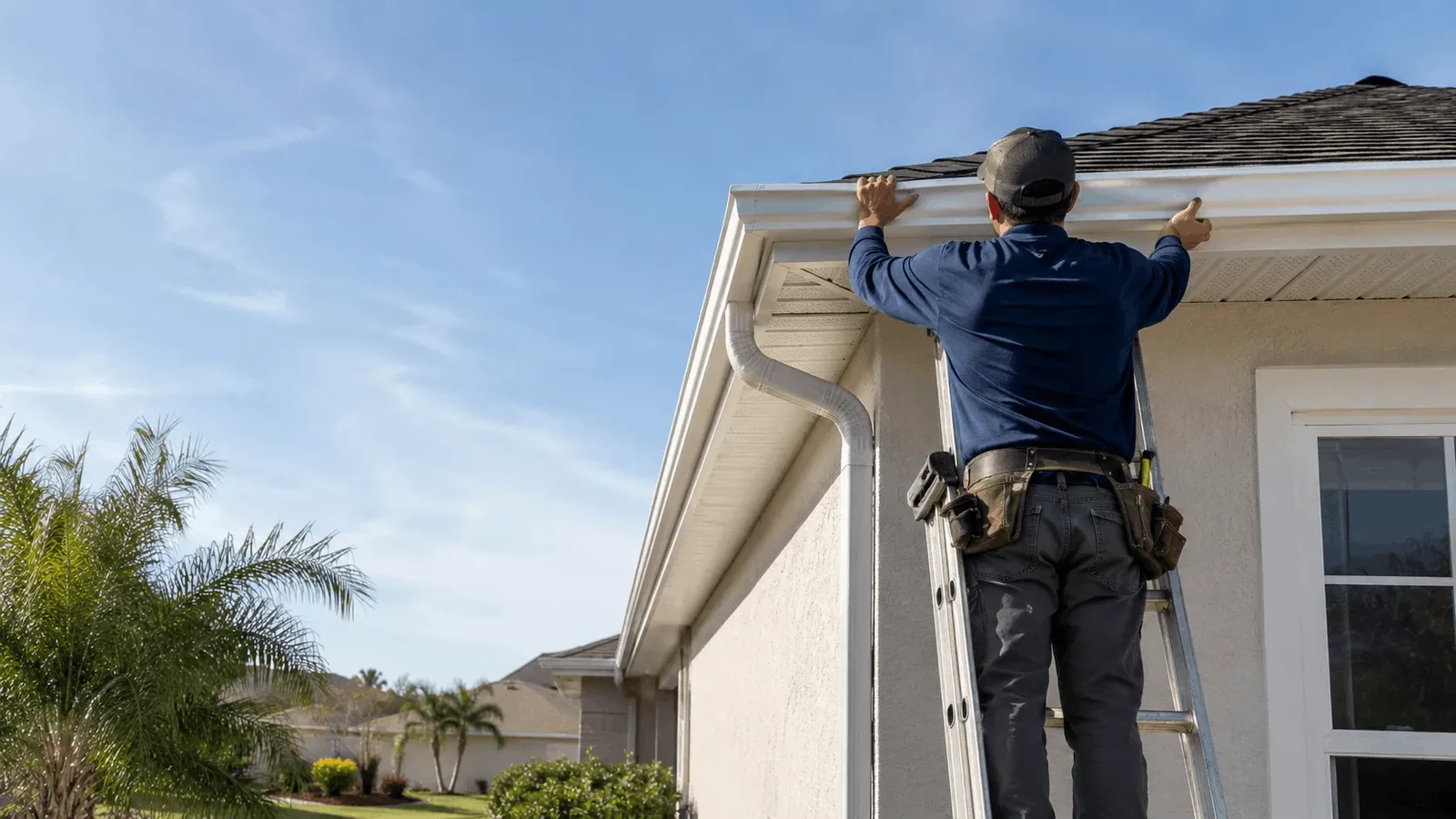
The problem with releasing water at the wall
A downspout that empties at the base of the wall takes all the water off a wide roof area and puts it into one small patch of ground against the building.
The gutters can be doing their job even so.
How far is far enough
Far enough means the water genuinely leaves rather than soaking into the ground beside the structure. There is no single distance that works for every property, because it depends on what the ground does with the water once it lands.
On ground that drains freely and slopes away from the building, a modest extension can be enough. On flat or slow-draining ground, water has to be carried considerably farther, and that is where a properly routed discharge earns its cost.
- Discharging onto a hard surface that slopes back toward the building helps nothing
The ground at the discharge point has to take the water
Moving water twelve feet from the wall and releasing it onto ground that holds water just creates a wet patch twelve feet from the wall instead of right against it.
How many downspouts a roof needs
The number follows the roof area each downspout has to carry, not the size of the house or the length of the gutter. Too few downspouts and the gutter overflows before the water can reach them, which looks exactly like a blockage and is not.
This is worth checking on a building that has been added onto or re-roofed, since a downspout arrangement sized for the original roof can end up carrying more than it was built for.