
When a test is required
The test measures how much outside air moves through the finished building shell under the Florida Building Code, Energy Conservation.
The test can be done at any time once every opening through the building's thermal envelope has been made, from the last plumbing vent through the roof to the last wire run into the attic. It does not wait for the house to be finished throughout.
The 7 ACH50 limit here
The result is measured in air changes per hour at a test pressure of 50 pascals, written ACH50, under section R402.4.1.2.
A lower number means a tighter building shell.
What the house looks like on test day
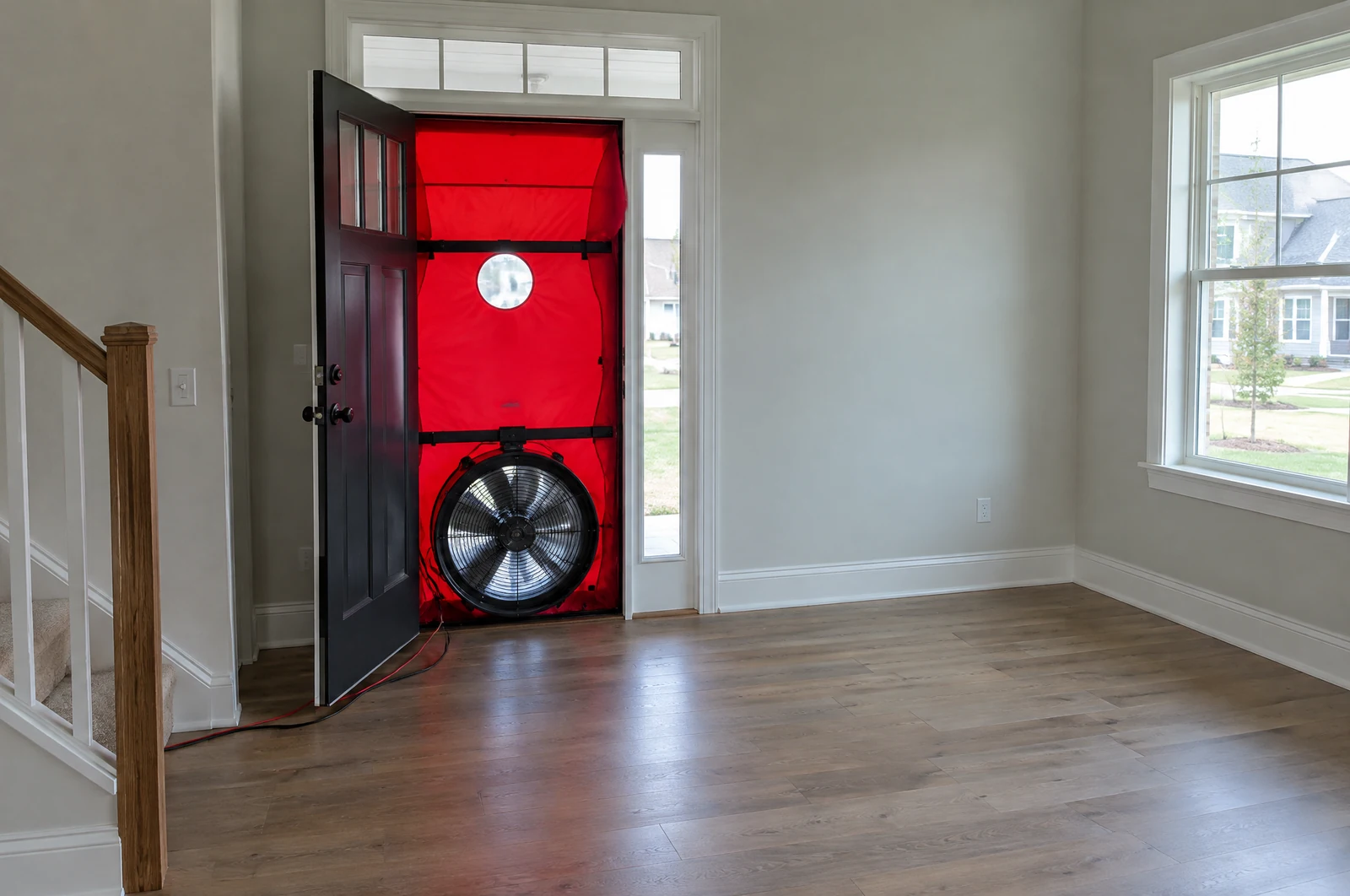
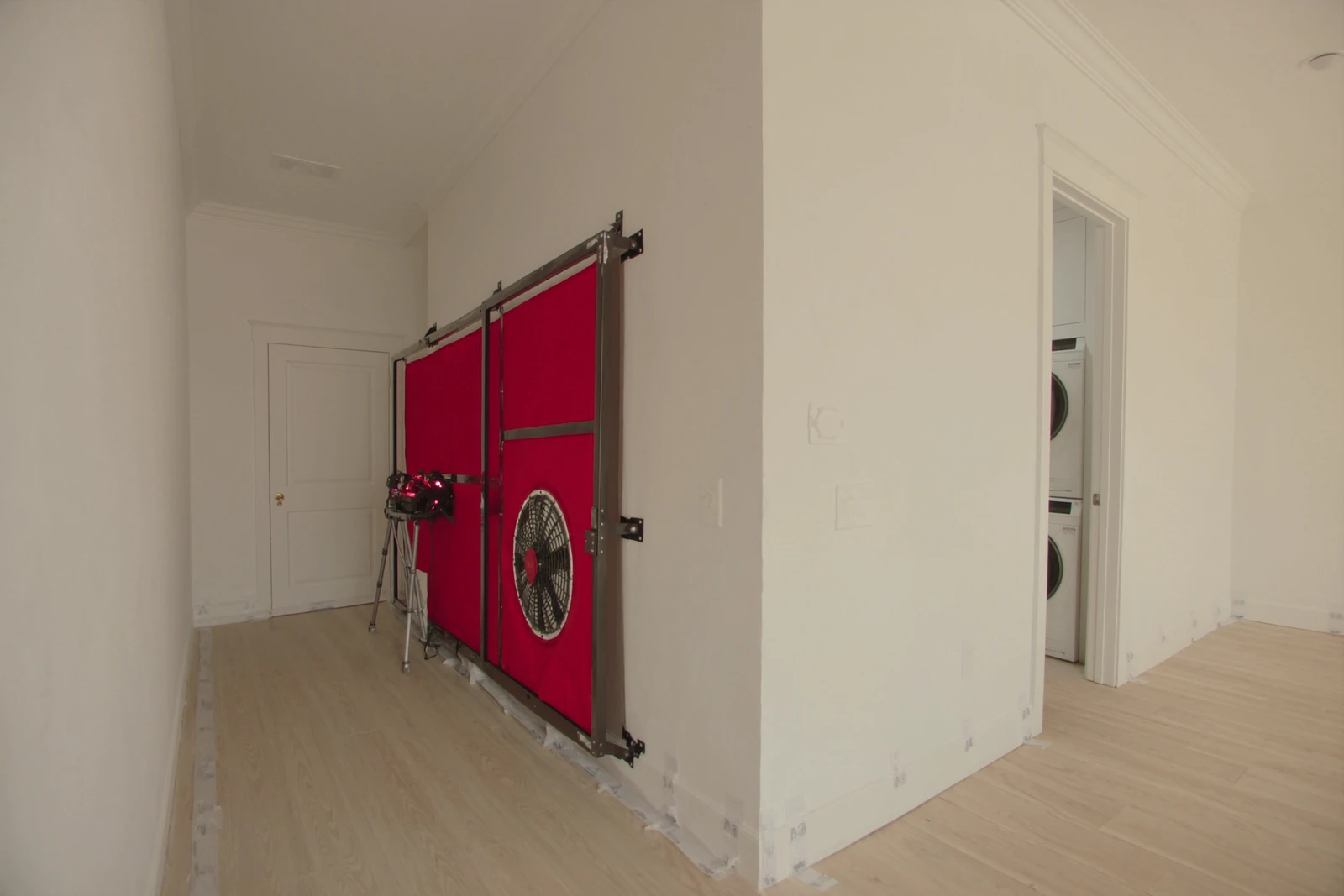
The code sets these conditions so every test is run the same way, and a fan fitted into an exterior doorway holds the house at the test pressure while the leakage is measured.
- Exterior windows and doors closed, but not sealed
- Fireplace and stove doors closed
- Exhaust, intake and flue dampers closed
- Interior doors open, where they are installed
- Heating and cooling equipment off
- Supply and return registers fully open, where they are installed
If a house does not pass
The leaks are corrected, and the house is tested again under the same conditions.
Additions and alterations
An addition or alteration that makes up less than 85 percent of the building shell is an exception to the testing requirement. At or above that share, it is tested the same way as a new house.
Questions before a test
What does the 50 pascal test pressure equal?
What happens if the completion date slips?
Can more than one house be booked?
Sources
- 2023 Florida Building Code, Energy Conservation, Eighth Edition, Chapter 4 [RE], R402.4 Air leakage (Mandatory), R402.4.1.2 Testing: https://codes.iccsafe.org/content/FLEC2023P1/chapter-4-re-residential-energy-efficiency
- 2023 Florida Building Code, Energy Conservation, Chapter 3 [RE], Table R301.1 Climate zones by county: https://codes.iccsafe.org/content/FLEC2023P1/chapter-3-re-general-requirements
- 2023 Florida Building Code, Energy Conservation, Chapter 1 [RE], R104.6 Reinspection and testing: https://codes.iccsafe.org/content/FLEC2023P1/chapter-1-re-scope-and-administration
- 2023 Florida Building Code, Energy Conservation, Chapter 6 [RE], referenced standard ANSI/RESNET/ICC 380: https://codes.iccsafe.org/content/FLEC2023P1/chapter-6-re-referenced-standards
- 2023 Florida Building Code, Energy Conservation, Eighth Edition, edition and effective date: https://codes.iccsafe.org/content/FLEC2023P1